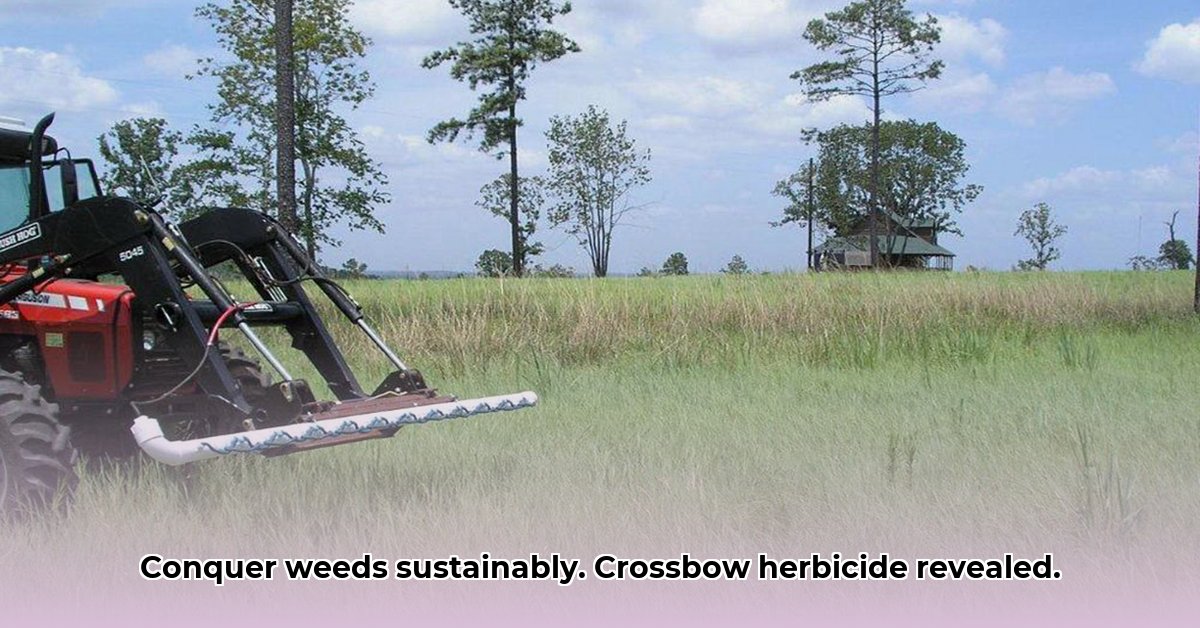
Getting weeds under control is crucial for a successful harvest. This guide provides actionable steps for using Crossbow herbicide from Tractor Supply effectively and sustainably. We'll cover safe application, integration into sustainable farming practices, and alternative weed control methods. For more on pest control options, check out this helpful resource on pest control.
Understanding Crossbow Herbicide
Crossbow is a broadleaf herbicide containing carfentrazone-ethyl (a chemical that inhibits weed photosynthesis). It targets broadleaf weeds without harming most grasses. While effective, understanding its limitations is crucial for responsible use. It's not effective against all weeds and overuse can contribute to herbicide resistance.
Applying Crossbow Herbicide Safely and Effectively: A Step-by-Step Guide
Safety First! Always read the entire label before handling or applying Crossbow. Wear protective gear, including gloves, eye protection, and long sleeves.
Step 1: Preparation Carefully mix Crossbow according to the label instructions. Accuracy is paramount – use a measuring device and follow ratios precisely. Improper mixing reduces efficacy and can damage your equipment.
Step 2: Calibrating Your Sprayer Ensure your sprayer delivers the correct amount of herbicide per acre. Incorrect calibration leads to wasted product or ineffective weed control. Calibration involves adjusting the sprayer to deliver a consistent volume of liquid, then calculating the amount of herbicide needed based on the area you want to treat.
Step 3: Even Application Spray evenly over target weeds, ensuring complete coverage. Avoid spraying desirable plants. Overlapping spray patterns slightly will ensure complete coverage.
Step 4: Post-Application Monitoring Observe the treated area for effectiveness and any unintended consequences. Note the response of different weed species. This feedback allows adjustment of application strategy in future applications.
Step 5: Proper Disposal Dispose of leftover herbicide and containers as instructed on the label. This prevents environmental contamination and ensures compliance with regulations.
Environmental Considerations and Sustainable Farming Practices
Crossbow, like all herbicides, has an environmental impact. While carfentrazone-ethyl has relatively low persistence in soil, minimizing its use is crucial.
How can we minimize Crossbow's impact? Targeted application is key. Utilize spot-spraying or band spraying to apply herbicide precisely where needed. This reduces chemical use while improving efficacy.
Integrating Crossbow into an Integrated Pest Management (IPM) strategy is essential for a sustainable approach. IPM combines various weed control methods, reducing reliance on any single approach. This might involve crop rotation, cover crops, and mechanical weeding.
Alternative Weed Control Methods: A Holistic Approach
Crossbow isn't the only solution. Other methods include:
- Mulching: Suppresses weed growth by blocking sunlight.
- Cover Crops: Outcompete weeds for resources.
- Hand Weeding: Effective for small areas or specific weed targets. (While labor-intensive, very effective!)
Combining these methods with responsible herbicide use creates a more robust and sustainable weed management strategy.
Weighing the Pros and Cons of Crossbow Herbicide
| Pros | Cons |
|---|---|
| Effective against broadleaf weeds | Potential for non-target damage if misapplied |
| Relatively easy to apply | Requires precise application and calibration |
| Widely available | Overuse can lead to herbicide resistance |
| Relatively low soil persistence | Not effective against all weeds |
Ongoing Research and Future Considerations
Weed control research is ongoing. Stay updated on new developments and best practices to ensure you use the most effective and sustainable approaches.
Implementing Precision Agriculture with Crossbow: A Practical Guide for Small Farms
Precision agriculture techniques, even on a small scale, significantly increase yields while minimizing resource use. Crossbow, strategically integrated, supports this goal.
Key Considerations for Small-Scale Precision Agriculture with Crossbow:
- Detailed Field Assessment: Identify weed species, density, and distribution before application to tailor your approach.
- Equipment Calibration and Maintenance: A correctly calibrated sprayer is crucial for precise application to minimize waste and maximize efficacy.
- Targeted Application Techniques: Employ methods like spot spraying, band spraying, or boom spraying to target weeds accurately.
- Weather Monitoring: Avoid applying when high winds or rain are expected to prevent drift and ensure herbicide effectiveness.
- Integrated Pest Management (IPM): Combine Crossbow with other practices like crop rotation, cover crops, and mechanical weeding for a holistic approach.
- Data Management and Records: Maintain detailed records of applications, weed pressure levels, and results to improve future strategies and minimize environmental impact.
This guide provides a framework; always refer to the Crossbow herbicide label for specific instructions and safety precautions. Sustainable weed management requires a balanced, adaptable, and informed approach.